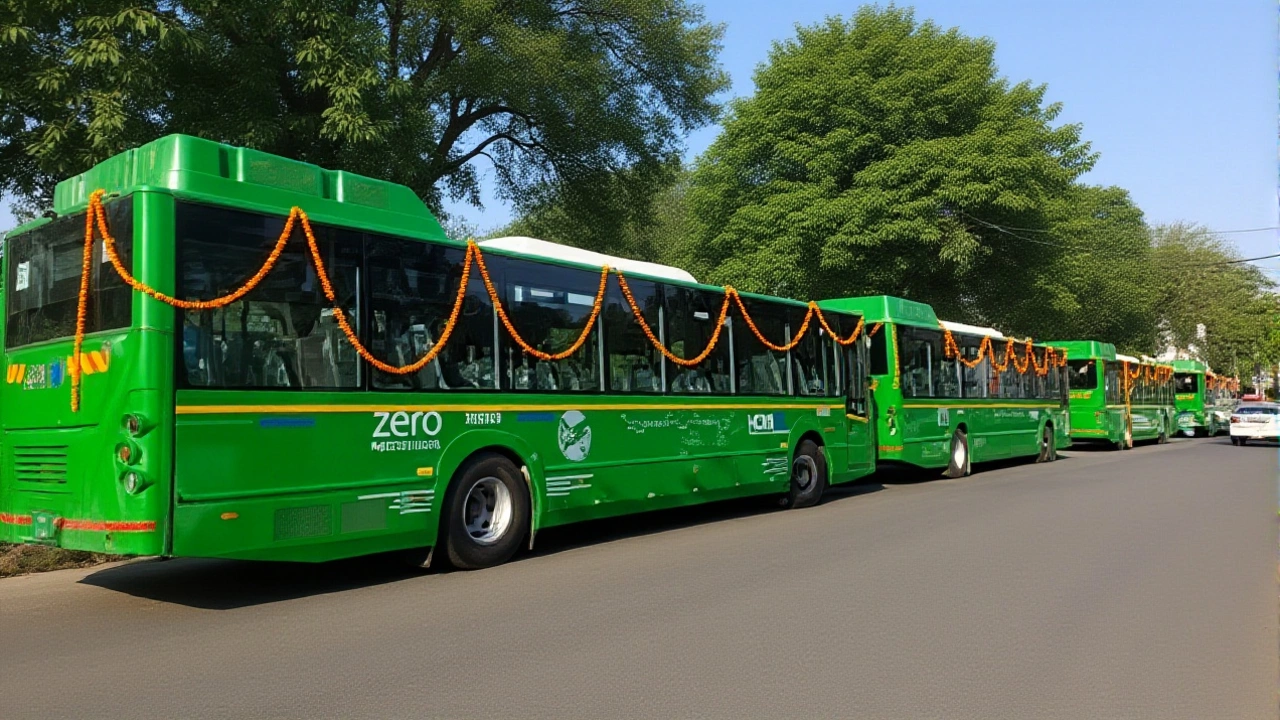
When Anil Vij, Minister of State for Transport and Highways in Haryana Government, announced the rollout of electric buses last week, commuters across the state got a rare win. The plan? Deploying electric vehicles (EVs) on 17 specific routes starting from Ambala. It’s part of a broader "Save Oil" campaign aimed at slashing fuel dependency and cutting transportation costs for daily travelers.
The initiative isn’t just about swapping diesel engines for batteries. It’s a strategic move by the state government to reduce its massive expenditure on fossil fuels. Here’s the thing: Haryana spends crores annually on bus operations, with fuel making up nearly 40% of those costs. By switching to EVs, the state aims to save millions while cleaning up the air in densely populated corridors like Ambala-Cumla and Ambala-Jagadhri.
The Numbers Behind the Switch
Let’s look at the specifics. The first batch consists of 10 electric buses, each capable of traveling up to 300 kilometers on a single charge. These aren’t experimental prototypes; they’re fully operational units manufactured by established Indian EV makers. The routes selected are high-frequency ones where idling time is minimal, maximizing battery efficiency.
- 17 Routes: Covering major urban and semi-urban connections in Ambala district.
- Cost Savings: Estimated reduction of ₹80 per kilometer compared to diesel buses.
- Emission Cut: Zero tailpipe emissions, reducing local particulate matter significantly.
- Ticket Prices: No immediate hike planned; subsidies will cover initial higher maintenance costs.
Turns out, the math works in favor of electrification. While the upfront cost of an EV bus is roughly 20% higher than a diesel equivalent, the operational savings kick in within three years. After that, it’s pure profit for the transport corporation.
Why Ambala First?
You might wonder why Ambala was chosen as the pilot zone. The city sits at a crucial logistical junction between Delhi and Chandigarh, handling heavy traffic volume. Its relatively flat terrain also helps EV batteries perform optimally without steep inclines draining power quickly.
But wait—there’s more to this story than just green energy. The state government is leveraging central subsidies under the FAME II scheme (Faster Adoption and Manufacturing of Hybrid and Electric Vehicles). This federal support covers about 15-20% of the vehicle cost, making the transition financially viable for cash-strapped state transport undertakings.
Skepticism and Reality Checks
Not everyone is cheering yet. Local union leaders have raised concerns about charging infrastructure. "Where will we charge these buses overnight?" asked one senior driver during a press briefing. Valid point. The state has committed to installing fast-charging stations at three key depots in Ambala, but details on grid capacity upgrades remain vague.
Interestingly, similar pilots in Punjab and Uttar Pradesh faced delays due to inadequate power supply. Haryana officials claim they’ve pre-approved land allocation for solar-powered charging hubs, aiming to avoid those pitfalls. Whether that promise holds water remains to be seen.
Broader Impact on Public Transit
This move signals a shift in how Indian states approach public transport. For decades, the model relied on cheap diesel and aging fleets. Now, with global pressure to meet climate goals and domestic air quality crises worsening, cities are forced to innovate.
The ripple effect could be significant. If Haryana succeeds, neighboring states may follow suit. Imagine entire fleets going electric across North India within five years. That’s not science fiction—it’s policy trajectory.
Experts note that reduced noise pollution alone makes this worthwhile. Diesel buses are loud, especially in residential areas. EVs run silently, improving quality of life for thousands living near bus stops and terminals.
What’s Next?
The first EV buses hit the roads in early October 2024. Monitoring begins immediately. Key metrics include battery degradation rates, passenger satisfaction scores, and actual fuel savings versus projections.
If successful, Phase Two will expand to 50 additional routes across Hisar and Karnal districts by mid-2025. Failure means back to the drawing board—and likely another year of diesel fumes.
Frequently Asked Questions
Which cities in Haryana will get EV buses first?
Ambala is the launchpad for the initial rollout, covering 17 routes within the district. Future phases target Hisar and Karnal, depending on performance data from the first batch.
Will ticket prices increase for passengers?
No price hikes are planned initially. The state government intends to absorb higher maintenance costs through fuel savings and central subsidies, keeping fares stable for commuters.
How do electric buses compare to diesel in terms of range?
Each new EV bus can travel approximately 300 km on a full charge, sufficient for multiple round trips on standard intercity routes. Fast chargers allow top-ups during mid-day layovers if needed.
Is there enough charging infrastructure in place?
The state has allocated land for three dedicated charging depots in Ambala, powered partly by solar energy. Grid enhancements are underway, though critics warn potential bottlenecks could delay scaling.
Who manufactures these electric buses?
While exact vendor names weren't disclosed in the announcement, reports suggest partnerships with leading Indian EV manufacturers like Tata Motors or Ashok Leyland, known for robust commercial electric fleets.